Thursday, 19 March 2015

Hanging by a thread...

It’s somewhat ironic that i am penning (or at last finishing) this article on Save a Spider day. Of course every thing seems to have its own day in this day and age so why not the humble arachnid? Of course it WOULD make far more sense for this special day to be at peak spider season in September/October but to be honest our eight legged friends can do with all the help they can get in the current scaremongering climate.

One of the gutter presses favourite things to write about, we have endured our fair share of outlandish and sensationalist stories regarding spiders. Normally these peak in the autumn and winter months as the spiders encroach upon our homes to escape the cold but the newspapers will generally print a story at any time. So when yet ANOTHER story about spiders hit my newsfeed i figured it would be a grand time to resurrect this half finished article, spruce it up and do MY bit for Save a Spider day….with this in mind please forgive the somewhat schizophrenic sense of tense and timing in this article.

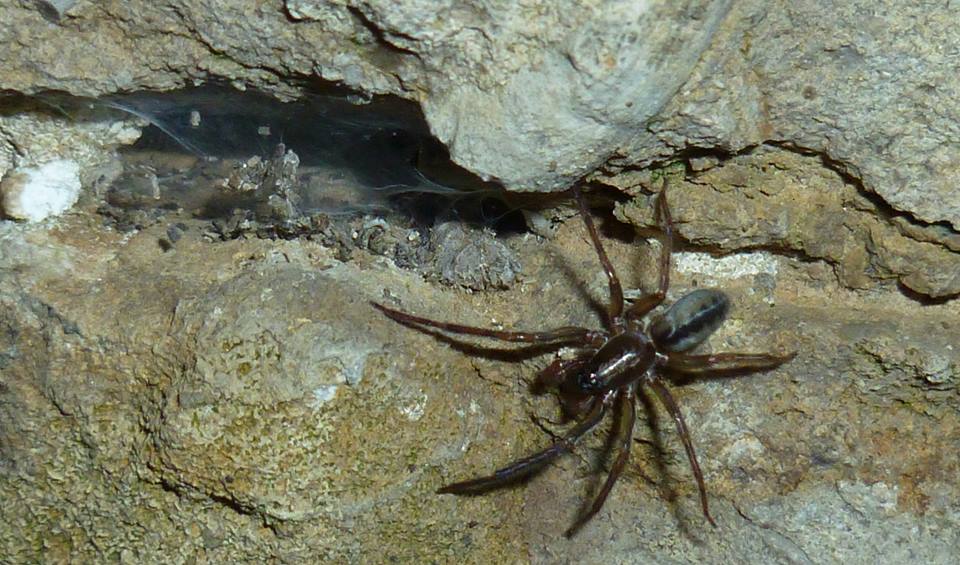
So other than the common house spider (check out my article here) what other arachnid has been in the presses sights? Why no other than the Tube web spider Segestria, particularly S.florentina, a rather beautiful species with iridescent green chelicerae (the mouthparts that house the fangs). Now straight away I want you to lose any notion that this is in anyway similar to the Funnel Web spiders that inhabit Australia, the only similarities are they are both black and the both have 8 legs. Even Atrax robustus (the REAL Sydney Funnel Web) rarely bites people and deaths are extremely uncommon thanks to readily accessible antivenin. By nature spiders are shy and secretive creatures and really don’t have any interest in us at all.

Right where was I? Oh yes, the latest drivel that the gutter press are throwing at us. So the latest headline is 100 GREEN FANGED SPIDERS ATTACK FAMILY!!. Once again, the headline bears only a passing resemblance to the actual story within. The facts behind the story are that someone came across a large number of S.florentina in his garden (this particular species do not generally encroach upon the interiors of houses as they tend to live in the small cracks and holes in brick mortar) and noticed more of them at night, in the words of the 'victim'  (and this is a direct quote)

“I saw one that was the size of a tablespoon and I also managed to catch one after I saw it rush across my fence and then jump off onto the ground.

“It was playing dead and my brother said it was only a bit of dirt, but I put a glass over it and moved it a bit and it shot up.

“I let it go and it moved off so quickly it was unbelievable. As I said I’m not scared of spiders but these made me jump.

Ok, so size of tablespoon, check. S.florentina are a large species.

Caught one (In his hand? If so he clearly wasn't bitten)

and it played dead, fair enough. Spiders will do this, they know if they move they are easier to spot. It’s a very pacifist strategy though i'm sure you will agree.

I put a glass over it and it moved, yup once a spider realizes its possum strategy has failed it will make a dash for it, which it promptly did when the glass was removed. Note that the quote is it moved OFF. Not that it leapt fangs bared.

Right so lets look at the definition of ATTACK

Aggressive and violent act against a person or place: – so not playing dead and scarpering. Case solved, more of the Daily Stars nonsense. Please feel free to email the editor, I am. Including the definition of the word attack. Including THIS one.

Criticize or oppose fiercely and publicly: Wow that sure seems to meet the description of what the Tabloids are doing at the moment. So therefore I put it to you that the Press are attacking the spiders! I’ll go one further and people might think this is a step too far but I honestly belive this to be the case.

The unofficial or unauthorized use of violence and intimidation in the pursuit of political aims: That is the definition of TERRORISM. Now I am not for one second going to suggest that the papers themselves are a terrorist threat and I do not mean to belittle the danger or importance of real terrorist threats that beset the world at large, BUT the Tabloids are embarking on a campaign of misinformation and intimidation to sell more papers. They have the public so scared that they are living in fear of something that has been part of our lives for centuries without causing major issues and people are going round killing spiders en masse as a result. I have had enough. It is time to set the record straight once and for all about these fanciful tales of redback bites, worlds deadliest spiders in bunches of bananas and the general aura of fear that surrounds our misunderstood 8 legged friends. I will be doing a general article a bit later about the wonders of the spider world in an attempt to educate and amaze, and i am working on a scientific response to the ignorance surrounding Phoneutria in particular with a learned acquaintance, Dr Stuart Longhorn, but for now I find myself forced to respond to more outlandish journalism.

Segestria florentina, - Authors own photo. 


So, I have set the record straight regarding Segestria florentina, which I am extremely peeved that I cannot actually find (update:I finally found one!) let’s have a go at one of the urban legends. Brazilian Wandering Spiders found in bunches of bananas. For many years now people have been reporting finding spiders in imports of fruit. (I might add I have not been fortunate enough to do so no matter how many grapes and bananas I buy!) and this certainly is possible. Although many importers, particularly those for the larger supermarkets) endeavour to kill off anything that might be lurking within by chilling the fruit a lot of invertebrates can survive this and just slow down, becoming more active when they warm up again. So we have established that stowaways are certainly possible on imported exotic fruit but how likely is it to be the Infamous Brazilian Wandering Spider?

Well lets start by looking at the beastie itself. Firstly, Brazilian wandering spider is kind of a misnomer as there are a great deal many arachnids that would fall under that description. The Family Ctenidae contains many sub genus of which individuals are often misidentified as being the most venomous spider on the planet. Put bluntly not every spider with red chelicerae is our deadly arachnid. There are a great many benign species that have that characteristic, and also share a few others with the critter in question. The ones that are dangerous are Phoneutria (Greek for Murderess) and even then not all eight species of the genus have the same level of toxicity in their venom. Indeed it is P.fera and P.nigriventer that have the title of most Venomous spider in their pedipalps.

I'm going to impart a little bit of fact about the venom of Phoneutria nigriventer to you now. It is NASTY, it has caused fatalities and it is highly toxic. Thankfully there is an effective antivenin available and deaths lately have been few and far between. Phoneutria venom can cause paralysis and asphyxiation/cardiac arrest if left untreated. It also has an interesting side effect of sometimes causing painful erections that can last hours. Unfortunately it can also destroy the tissue at the base of the penis causing permanent impotence so its not all great. Nonetheless components of the venom are being actively researched for a treatment for impotence. So yes it is lethal (or at the very least unpleasant) stuff but how often do people die from it? Well not all that often at all as it happens (a whopping 14 since 1926!).

Phoneutria fera -  (photo by Stanislav MacĂ­k from Czech Arachnological Society - European Arachnology)


There are a number of reasons for this. One is that not every bite will be envenomed. Venom is precious to a spider, it will not waste it on something it has no chance of eating. Therefore they have the option of delivering a ‘dry’ bite in which little or no venom is delivered. This as you might imagine will cause proportionally less damage than a fully envenomed bite that has delivered a full load (such as Atrax robustus the Sydney Funnel Web spider is known for). Add to this the rather nomadic nature of the spider. Although they are becoming a more regular sight in Brazilian cities (certainly in the case of P.nigriventer) bites are still rare and mainly occur when the spider is disturbed and has no chance to throw its rather spectacular threat display. To my knowledge there has been only one recorded bite in Britain and that was non fatal though it did take the victim a week in hospital to recover. So don’t be scared of bananas the odds of discovering a spider in them is remote and the chances of that being Phoneutria are probably less than the chances of successfully navigating an asteroid field (3720 to 1 in case you were wondering )

BUT what about eggs on Bananas? I refer you to the recent newspaper stories where a housewife found some white fuzzy eggsacs on her bananas, now these stories seem to have been edited recently (for a start they actually bear pictures of an actual Phoneutria now) and the pest control companies are quoted as saying that it was a ‘tropical species’ (though the Headlines still dramatically proclaim ‘Worlds deadliest spider found in bananas!’) I'll not bother doing a great deal of debunking here. The photo that my friend Dr Stuart Longhorn has mocked up does a more than ample job of showing why its NOT Phoneutria eggs on bananas.


See that? A far cry from the small specks of mould that the ‘victim’ reported. Suffice to say if you had any kind of Phoneutria egg sac on your 'nanas you’d smeggin well notice. Huntsmen of various descriptions do turn up in imported fruit and there is a Millennium Falcon in an asteroid fields chance that it could be a Phoneutria species (as did actually happen recently – no one was harmed) but more often than not it will be a relatively benign huntsman that has inadvertently hitched a lift to our stores/shores. So whilst caution is advised hysteria certainly is not required.

You realize this article has taken nearly three weeks (and about 5 months to finish!) to write? Not because of writers block or any other issues on my part but simply because we don’t seem to be able to go any more than a few days without another daft spider story in the press.

I'll pay them all lip service or we will be here for an age:

Spider builds 6 foot web across garage! No it didn't you used a forced perspective photo to make it look that way and even compounded it by confirming that the spider in question is only 1.5 inches making your claim of the web’s size impossible as there is no way the spider fits into that webs diameter 48 times.


False widow causes woman to have thumb amputated! No it didn't necrotizing fasciitis did. It’s a rather nasty infection that as its name suggest causes necrosis or rotting of the flesh. You can get it from any open wound and the best defence is to keep the wound sterile. I freely admit it could be a spider that bit her that carried the infection but she could have got a paper cut and suffered the same fate. Just unfortunate.


Dead spider in kettle kills family of 6 in Africa! My word, how ridiculous! Surely I don’t even need to explain this one! Boiling a spider may well make your tea not taste nice but it wont kill you, it doesn’t matter how venomous it is. Besides at boiling te,peratures the venom would actually become LESS effective as some of the enzymes break down, as has been studied with Phoneutria venom.

A story so stupid it even makes spiders face palm


Puppy Sized spider found in Brazil. This is true, I have several. How big is a puppy though? Well when it is born, not very big. And if it is a Chihuahua also not very big! Its all a case of perspective. For the record Theraposa blondi and its close relative stirmi have been known about for over a hundred of years and can reach a whopping 12 inches in leg span. Therefore if the puppy is 12” or less then yes the spider is puppy sized. Moving on…..

Theraposa strimi, the author's own spider - 9 inch legspan


Pamphobeteus antinous - authors own spider. 10" legspan


Spider burrows into mans stomach: The recent (well it was in October) story goes that a an individual returning from a tropical destination went to the doctors with a complaint of pain in his stomach and an interesting mark on his torso. Upon investigation it was discovered that a creature had burrowed into his skin leaving a long track mark on his body. Upon extraction this creature was apparently a spider. Note, no pictures of the culprit are available.

It is very unlikely that this is a spider. Although they don't have lungs that work the same way as ours a spider still requires air, now some spiders are known for burrowing and it is no secret that they do prefer enclosed spaces. Some other parasite or interloper certainly but i very much doubt a spider would be capabe of what is seen here. It should also be noted that not one single peice of corroborating information is presented, The only information was that the creature was the size of a match head. If you ask me it sounds a lot like a mite or tick which ARE known for burrowing into skin.

Spider bite causes ebola in uk housewife! Ok I made that one up but its no less outlandish than many of the other headlines….

I have lost time of the amount of times i have said this but here we go again...

spiders are NOT out to get you!. IF spiders felt the same way about us as so many of us do about them then I have no doubt that we would be in some kind of danger. But they don’t. Spiders want to be left alone, they want to eat and breed and go about their spidery little lives and that is about it. The same as most of the other life forms on this planet. It is us Homo Sapiens that seem to have the adjustment issue.

Spiders really are wonderful amazing and interesting creatures that deserve our respect and understanding. I’ll be endeavouring to show this in a series of articles that i am working on (which wont take as long as this one to publish!) In the meantime Dr Longhorn and I have some work to do regarding the misconception around Banana spiders. Watch out journalists we are coming for you with research and facts, we've had enough of your bullshit and your lies….

Friday, 20 February 2015

Home Is Where The Spider Is

A note from the author: Now before I begin proper on this latest missive, allow me to extend my thanks to all the readers of my article The False Scourge of the False Widow and its fellows. I’m glad to say that together we really did make a difference. It is noticeable everywhere, from the general lack of panic that it displayed amongst the public to the dismissive nature of comments when stories about Steatoda nobilis rear their ugly head and the media do their best to instil fear into us in a bid to sell papers and get hits. So thank you, my aim was to reassure the public and save a few spider lives and it is extremely gratifying to see that in some small way this objective has been achieved.

It’s nearing that time again; the nights draw in and the weather grows colder. Can you feel it? It’s time for the tabloids to start spouting their spurious lies again, and this means that the gutter press have had to find another subject for their scaremongering. This time it’s an all too common spider friend that they have in their sights: the house spider. I for one find this absolutely hilarious, as I would struggle to think of a more benign arachnid.

Of course not everyone will be so tickled. House spiders (Tegenaria domestica to the press) unfortunately tick all of the boxes when it comes to people’s problems with spiders. They are large, hairy, prolific and fast. They are also completely harmless! I can understand a little the concern over Steatoda, they look a bit like the infamous Black Widow and can inflict a reasonably painful bite. They are also something that people have only recently started to notice thanks to a recent rapid expansion throughout most of the southern UK, though they don’t seem to have quite made it to the northern reaches. They are an introduced species and therefore their range is not quite nationwide just yet. Tegenaria, on the other hand have been here for much longer; you’ve all seen them and we should all know that they pose us no threat.

Beyond this it is certainly worth mentioning that the press are doing their best to spice things up a bit at least. Whether it’s the obsessed Daily Star, with their nearly constant arachnid-hating, or one of the other tabloids, spiders have once again started to make it back into the news in various ways, normally employing words such as “invading”, “rampaging”, “attacking”, or other such scary terms. Now, as it is that season again I shall bring my efforts to debunking each of these in turn, but this time around I am defending the house spider and the hobo spider that the press currently have their knickers in a twist over.

Let’s start with a few facts. Tegenaria is a genus of spider that is not invasive: in fact it has been introduced to much of the rest of the world from Europe! It consists of around 100 species, of which we enjoy just a few here in the UK. I’m not going to get too deeply involved in differentiating between the myriad subspecies as a: nomenclature and taxonomy of arachnids are headache-inducing at best and are also constantly changing, with Tegenaria currently under revision and some species seem destined for Erategina, so all these scientific names are soon to be redundant anyway. Suffice it to say it can be very difficult to tell spiders apart at times. So if many learned Arachnologists can sometimes struggle with these things – often a conclusive ID can only be obtained with microscopic inspection – how are we supposed to believe that a pest controller or nurse can make a positive identification, often without seeing the actual specimen?

Anyway, back to Tegenaria (or Erategina). Yes, they are the archetypical ‘creepy crawly spider’ that people tend to see as the days get colder. More often than not you will encounter a male out and about looking for a female to mate with/not get eaten by. These poor blighters have enough to worry about without contending with a book or boot heading in their direction! You will often see them late at night, normally scurrying across the floor. I guess it is the movement that is one of the things that really bothers people; they are easily startled and bolt rather than retreat. This rapid movement can easily be misinterpreted as an attack. I have never heard of a house spider attacking anyone. They are a ridiculously timid species and their only thought is for flight, not fight.

House spider, photo by Jade Masters


I mean, come on guys, this is a creature that cannot even negotiate a bathtub! How scary can they possibly be? It doesn’t help that they have a face that only a mother could love. They lack the adorable characteristics of peacock spiders (Maratus volans, for instance) or even the photogenic garden spiders (Araneus) and the proportions are those that will invoke the worst nightmares of the majority of common folk, being all gangly, hairy and lightning fast. However they are great at keeping the number of pests down and apart from the males you see on a quest for nookie, a very shy species that prefer to secrete themselves in extensive tunnel-like webs in corners of sheds. If you are to come across one it is more than likely to be in the bath as, as previously mentioned, they are incredibly inept at escaping the smooth sides of your average bathtub.

So with that introduction to the house spider, let’s have a look at a couple of the stories, shall we? To be clear, I will not be posting links to these tales of arachnid terror as I refuse to add to the advertising revenue of these scaremongering swine. It all started with headlines proclaiming Giant Spiders Set To Invade UK Homes This Autumn, Warn Experts, courtesy of the Mirror. And not to be outdone, the Daily Star gave usAttack Of The Giant Spiders: Scorching Summer Leaves Beasts Poised To Invade Britain.

Despite the fact that experts are warning no such thing – the headline is horribly out of context to the actual quotes given – this is something that happens every year. It gets cold. Spiders like it warm, spiders come inside. It’s nothing new and certainly not worthy of a headline, but I guess it is the kind of thing that will sell papers. I’m also unsure on how any arachnid can invade (surely one of the gutter press’ favourite verbs) Britain from within Britain: I was always of the impression that invasions came from outside of our sovereign lands. Maybe the editor of the Daily Star can help me out with this. I suspect my invitation will go unacknowledged, however.

One point I will concede is that the spiders do seem to be a bit bigger this year than in previous years. There are probably a few reasons for this: one is the weather of late, which has been ideal for the reproduction of the small flying insects that form the primary food source for the spiders. Of course, something else that may have resulted in a boom of prey insects is people indiscriminately slaughtering their predators around this time last year: you only have yourselves to blame, people! Anyway, it gets cold, spiders come in, you’ll see more spiders. Nothing to see here; move along.

After that non-event, they had another go at terrifying the public with the following beauty: They’re Invading! Terrified Couple Under Attack From Aggressive Venomous Spiders. Well, I suppose we should be thankful that they have started to make the correct distinction between venomous and poisonous at last! This aside, they’ve realised they need to give the story a bit of a twist to keep people interested, so we are introduced to a new arachnid terror: the Hobo spider, an “ultra-aggressive monster spider”. Mysteriously, none of the articles or ‘victims’ seem to be able to produce one, instead triumphantly brandishing dead male house spiders. Apparently, “Liam, dad of 3” has been bitten by one of these attack-minded killing machines and has a horrific wound that’s expected to take three months to heal – it looks a bit like a cigarette burn. His partner has encountered and killed around 30 of these monsters, although none of the dead spiders they portray seem to be particularly oversize.

Hobo spiders do exist. They are called Tegenaria agrestis, from the Latin for ‘field’ – their primary habitat. The effects of their bite are largely undocumented as there have been very few bites to go on. They are not aggressive and not monster. They are not native to England and I have never actually seen one in this country. All the pictures I have seen thus far purporting to be a ‘Hobo spider’ are a completely different species. Should Liam’s condition have developed from a spider bite I would think it was once again from a secondary infection rather than the venom itself. Describing to the spider to the intrigued journalist, Liam stated, “their bodies are pretty much normal size but it’s the legs – the front legs are the size of your hand.” The quote appeared immediately below a picture of a house spider barely bigger the one penny piece it was depicted with.

In a similar story involving a four-year-old child, the culprit is described as a 5” house spider even though the pictures attached to the article are of a garden spider (Araneus diadematus) and jumping spider (probably Salticus sp.) respectively. Five inches? The jumping spider maxes out at 5mm, so I am already taking this article with a big pinch of Salticus. (Sorry!). Secondly the picture of the rash on the poor child seems to follow an unusual and atypical distribution pattern, affecting the torso only. That’s a bit odd. Any rash caused by a bite would spread across the body, not be impeded by clothing. In fact, a rash like the one pictured could be something altogether viral or a reaction to a chemical on the skin, not envenomation from a bite. This could be an allergic reaction to a fabric softener for all we know!
UK Jumping spider (possibly Heliophanus flavipes) Photo courtesy of Simon Robson


According to the story, the staff at a walk-in medical centre – not even a hospital – “discovered an insect was to blame“ for the child’s condition and prescribed a course of tablets: a surprisingly well-informed and accurate diagnosis without bloodwork or consultation with an expert, even if we forget that spiders aren’t insects. I’m unsure what tablets you would prescribe for envenomation; however, I suspect that it may have been some kind of antihistamine, a drug family commonly used for allergic reactions. Regardless, it wasn’t considered serious enough for a trip to the hospital. There are endless things that could have caused this kind of reaction: the aforementioned chemical agent, a virus, flea bites, bed bug bites, dust mites bites (or at least the reaction to them) – but no, plainly the spider was to blame. I have never heard of a house spider biting anyone; it’s certainly possible, but every single one I have ever encountered, and we are talking hundreds here, has scarpered. So, I’m sorry, the evidence just doesn’t support the story in this instance. Notwithstanding the quality of these scaremongering reports – bad grammar is rife within – and the hilarious amount of ill-considered misinformation that they endlessly come up with, the only thing that I am horrified by is that this kind of reporting is not regulated in some way.

Now, I am under no impression that this is going to end any time soon; this has already been raging for some time, and it has started to reach a point where once again I have been compelled to say something about it. Spiders have few enough friends as it is: even members of their own (inherently cannibalistic) species want them dead. Let’s not add to their difficulties. Should you encounter one, just trap it under a glass, slide a bit of card underneath and pop it outside. If it’s a male, as it nearly always is – you can tell by their enlarged bulbous pedipalps or feelers – then it likely doesn’t have all that long to live anyway and it is really not interested in you in any event.

At the end of the day, a spider is not smart: they lack the brainpower for reasoned thought and every single encounter with another organism is probably best characterised thusly: “can I eat it or is it going to eat me?” The first response will result in a bite. Venom is used to kill prey; no other reason. The venom kills the prey, or at least renders it helpless, so that the spider can eat up all the juices at its leisure. If it is not something the spider can eat, then its primary reaction will be to flee. Spiders are not aggressive: nearly without exception they will not launch themselves at something they have no hope of eating, particularly not something that is several hundred or thousand times bigger than they, and waste precious venom in the process. Spiders can be defensive, reacting to provocation, but even then a bite will be a very last resort.

So don’t fear them. I don’t expect you to love them like I do, but maybe find a way to respect them. They are fascinating creatures – I will be following this up with a more generalised article in an attempt to persuade you – and it is unfortunate that they key into all our deepest primordial fears. Should you encounter a spider and be unsure of what type it is, don’t forget that there are several aids to identification. There is even a British Spider Identification group on Facebook that will gladly ID any specimen, preferably alive – it might even be me that comments.

So until next time, keep calm and carry on. After all, it’s only a spider.

Weave Had Nothing But Bad Press

This article, which i wrote when the False Widow Hysteria was at it's height, was originally hosted at https://elwellpress.wordpress.com/2013/10/24/weave-had-nothing-but-bad-press/identification-guide/

It has been reproduced here with the kind permission of Christie Louise Tucker

So like a bothersome pest – completely unlike our subject, which sits in a web and bothers no-one – the horror stories about deadly spiders just will not go away. Since the publication of my well-received first article, the gutter press have continued to spout their hysterical headlines: everything from vulnerable single mothers being attacked by spiders to babies eating False Widows, before resorting to writing about a mother just seeing and killing spiders – even though none of those spiders that she had killed was Steatoda nobilis. Bravo!


It’s all getting a little silly and thankfully, due to the efforts of myself and many likeminded individuals, the message seems to be getting though. Increasingly, the articles are being lambasted by the general citizenry for what they are: scurrilous attempts at scaremongering. So, while I’m pleased that people are now a little more informed about Steatoda nobilis I feel it would be remiss of us if I didn’t try to impart the same level of education on the part of Latrodectus mactans, the Black Widow spider, the new target of the tabloids’ sensationalist hyperbole with headlines like “Black Widow spider invasion from US sparks fear of lethal bites.

So we’d like to introduce you to the real Black Widow, and hopefully by the end of this article we can turn the much-feared Black Widow into the much respected Black Widow instead.


What’s in a name?

The Black Widow’s very moniker is designed to spread fear, coined for the female’s penchant for killing and eating the male spider shortly after mating. Far from being the Black Widow’s particular party trick, the males’ fate in the spider kingdom is frequently -although not always- to be eaten by the female. From a logical perspective this can make sense and is not simply a cruel act by Mrs Spider. Male spiders usually die shortly after reaching maturity. Their biological purpose is to become mature and mate. Once this has been achieved the male is redundant. He has passed on his genetic code and his existence is no longer biologically imperative. Please note, however, that the male does not willingly offer himself up: he has a sense of self-preservation and will likely try to escape after performing the deed. They just don’t always make it.

From the female’s perspective, she is about to lay hundreds of eggs which she will wrap up in a silken sac and defend with her life. Therefore, it is sensible to absorb as much nutrition as possible, and a male spider makes a fine meal. The male is sacrificed as a cruel necessity. So technically, all spiders have the potential to be ‘widows’ and there’s no real reason for Latrodectus to claim sole rights to the name. But then I guess just calling it the clumsy black-and-red spider doesn’t really have the same ring to it, eh? For the record, the Genus name Latrodectus comes from the Greek for ‘biting in secret’- they don’t just name these spiders at random, you know!
Image
Taken by Stuart Longhorn, Latrodectus Sp. in natural habitat in Central America


The lady herself

Just like Steatoda, the False Widows –including the species S.nobilis, the Noble False Widow of recent reports – it is the females of Latrodectus that bite. The females are easy to distinguish being many times larger and bulkier than the males. The Eastern Black Widow Spider (Latrodectus mactans) is one of 32 confirmed species, and is usually jet black, (although some variations with dorsal red markings exist) with a highly distinctive red hourglass marking on the underneath of the abdomen of both sexes, although it is more vivid on a female. Certainly experts should not be troubled with the same volume of mistaken Identity cases that Steatoda has caused, resembling as it does so many other UK species currently being slaughtered in its stead. This said there is significant variety amongst Latrodectus with many weird and wonderful variants each more colourful than the last.

Despite the papers’ reports about the abundance and deadliness of Black Widows in the UK, they are found here in very small numbers. They came over in imports from the US, this much is true, but they are isolated to just a few small colonies in the south in and are not likely to be seen. The main reason for this is that they like to stay in their webs and are not likely to attack. In fact, Latrodectus are comically uncoordinated when not in their haphazard webs and could quite comfortably be described as clumsy; certainly more Bridget Jones than Femme Fatale. Subsequently, you are very unlikely to see one or even be close to one, and given their distinctive markings and lack of similarity to other species it is likely that reports will be few and far between. They are also rather small, reaching no more than 4cm or so. So in a nutshell, you’re looking for small black spiders that have a distinctive, easily-seen hourglass shape on the ‘belly’, and stay in a haphazard-looking web. Most of us will go our entire lives without ever seeing one.
Image
Taken by Stuart Longhorn, Latrodectus Sp. in natural habitat in Central America

The reports

We’ll take an article from the stalwart of shoddy reporting, the Daily Star, who have featured a spider story every day this week and show no signs of stopping: Black Widow spider invasion from US sparks fear of lethal bites. This article should be issued to GCSE Media Studies classes for careful language analysis. First, this must be the first time ‘six’ has constituted an invasion. Secondly, all of Graeme Skinner’s quotes have been taken out of context. The line “Black Widows have come in this year” is a statement, not a warning: they come in every year, along with many other species that don’t get reported or become an established species. “Experts fear there could be widespread deaths,” but mysteriously wouldn’t go on the record to comment further on that? Thirdly, the only thing “terrifying Brits” is the tabloids’ misjudged reports.

Ricki Whitmore may have suffered a gruesome leg wound, but it was almost certainly not from the venom or the bite; secondary infection is the most likely cause. Also, “it is only a matter of time before they kill” is a dangerously misleading overstatement, and is directly contradicted in Mr Skinner’ next quote. For the record, nearly anyone can get a Dangerous Wild Animals License, provided certain criteria are met and the license fee (which varies hugely from borough to borough) is paid. We at the Elwell Press feel that the spider’s bite is the least of the Star editorial team’s worries – ifLatrodectus could engage a libel lawyer, the arachnophobes of Wapping would really be in trouble.

The bite

If you are ever unfortunate enough to be bitten by a Latrodectus species, then seek medical attention immediately, retaining the spider’s body in a secure container for examination if possible. Although unlikely to be fatal to a healthy adult, being bitten will be a deeply unpleasant experience. Typical symptoms are localised swelling, nausea, tremors, a fever, and painful muscle cramping. Like Steatoda,Latrodectus has a neurotoxic venom, although it will certainly not rot or dissolve your flesh. Latrodectusbites have killed in the past, although fatalities are extremely rare. The young or the old are particularly vulnerable as their bodies lack the capacity to safely metabolize the venom. However, an effective anti-venom against toxic components of Latrodectusvenom has existed for many years, and been regularly used throughout the world for effective treatment of bites.

As worrying as that sounds, there is another glimmer of good news. As stated previously, you are extremely unlikely to ever encounter a Black Widow spider. The chances of coming across one are infinitesimally small; in spite of recent claims, they exist in tiny numbers in the UK and, like all spiders, will avoid human interaction as far as possible. This round of fearmongering will backfire on the papers as the lack of sightings fail to hold readers’ interest. This correspondent has been asked to identify a great many spiders in photographs of varying quality, some of which were barely recognisable as spiders. None of these have been Latrodectus, and only about 20 percent have even been Steatoda. It would be astonishing should widespread reports of Black Widow spiders surface.

In time, Latrodectus may well become an established species in the UK. As climate change continues to be a powerful force in dictating animal habitat and behaviour, we may well see, in several years’ time, Black Widow spiders becoming more prevalent. In that eventuality, what will we do? Well, I guess we’ll just have to deal with it the same way that other countries where these spiders are abundant do: with caution but not panic, with respect but not fear. Leave well enough alone and no harm will come to you. Deaths from Latrodectus venom are extremely uncommon, normally only occurring in freak instances where multiple bites are recorded.

In the UK, we do not have overtly dangerous or lethal species present in the wild in any great numbers. From an exotic animal perspective, we are a rather boring island. Should we ever reach the stage where such potentially harmful invertebrates are more commonplace, then we will simply need to adapt. After all, if Latrodectus ever became that much of a problem an antivenom is readily available; that there is no antivenom for Steatoda bites should indicate the seriousness with which their bites are to be regarded. So let’s not lose our heads when we have extremely isolated and small numbers of a relatively medically significant spider like Latrodectus present as an interloper from foreign shores. Stiff upper lip and all, chaps! Best foot forward, and in true British fashion, let’s keep calm and carry on.

I spied a spider: But which spider have I spied, eh? A False Widow Identification Guide

This article, which i wrote when the False Widow Hysteria was at it's height, was originally hosted at https://elwellpress.wordpress.com/2013/11/10/i-spied-a-spider-but-which-spider-have-i-spied-eh-a-false-widow-identification-guide/
It has been reproduced here with the kind permission of Christie Louise Tucker
MEME
Contrary to popular reports, not every spider in a UK household is a False Widow. Indeed, out of the vast amount of arachnids I have been asked to identify only a very small proportion have been confirmed to belong to the genus Steatoda and even fewer as the Noble False Widow, S.nobilis. Unfortunately a lot of these spiders are being killed due to these cases of mistaken identity (not that you need to be killing S.nobilis either). So here I am going to present a guide on identifying a few UK spiders in the hope of cutting down these instances, I will show you what to look for in a spider to either hopefully identify it as a False Widow or eliminate it from suspicion.

First, however, a few brief disclaimers.

1: There are over 650 species of spider in the UK (of which a dozen are reported to have bitten humans). Obviously I cannot represent even a significant fraction of this number here. What I will be featuring in this article will be ‘the usual suspects’; the spiders that most frequently come up in pictures I am asked to identify. This should allow you to visually identify 80% of the S.nobilis look-alikes you come across in the UK. The list is not exhaustive, however, and you may still come across the occasional oddity.

2: Arachnid markings can vary wildly, depending on the age and sex of the specimen and even upon location. Bear in mind that spiders periodically shed their skin as they grow and as time passes markings may become duller, losing the vivid colours they might have when freshly moulted – this may also cause some confusion. To accommodate this, I will be presenting alternative methods based upon physical characteristics, not just markings.

3. Spiders are broadly defined by genus (Araneus, Amaurobius, Tegenaria, Steatoda etc.) Within these, there can be a number of different species, (or sp.) So if you see XXX .sp that means it can be any species from within that genus. Sometimes there are just a few and sometimes many more – Theridion has hundreds! This can also make identification difficult, but I shall endeavour to present enough information for you to make an educated and informed identification.

4: If you poke your fingers into webs and crevices then you run the risk of being bitten. Spiders are remarkably tolerant and shy creatures that normally run at the slightest disturbance, but they will sometimes bite if given no other recourse. However, no spider will bite you for just looking at it so fear not about viewing them, or taking photos. The key here is to adopt an attitude of respect not fear.

I will be using scientific terminology throughout to describe various elements of a spider’s anatomy, as illustrated in the diagram below.
Spider anatomy
So without further ado let me present a few of these usual suspects. None of these are False Widows and are not in the family Steatoda.

1.Zygiella sp. featuring Zygiella .x-notata, The Missing Sector Orb Weaver


zx
Photo taken and kindly supplied by Jenni Louise Cox
Most commonly it is the Missing Sector Orb Weaver, Zygiella x-notata, that is misidentified and ends up paying the ultimate price. In truth, these are easy to distinguish from False Widows before you even see the spider! No false widow will ever spin an orb web – the big, pretty, two-dimensional webs commonly seen. A Steatoda web is messy and in a corner, usually with the spider hiding out of sight in a tubular retreat, waiting for prey to get caught in the web. Missing Sector Orb Weaver spiders spin vertical 2-dimensional circular webs that often miss a section (hence the name) giving them a somewhat unfinished look.

Zygiella frequently gets mistaken for Steatoda as it shares the large bulbous abdomen and longer front legs of that genus and has pale markings that can superficially seem similar to Steatoda nobilis. However, the rest of the abdomen colouration is frequently lighter than Steatoda and the glossy, almost silvery abdomen lacks the pale anterior band characteristic of the Noble False Widow, having vertical dark stripes instead. The forelegs are also shorter than Steatoda’s; close but no cigar. This species makes up the majority of the spiders I am tasked to identify. It’s utterly harmless and it is a real shame to see so many of this attractive spider killed through ignorance.

2. Amaurobius sp. featuring Amaurobius similis, The Lace Web spider


amaourobiussmilis
Photo taken and kindly supplied by Jenni Louise Cox
Amaurobius pictures usually tend to be either A.similis or A.fenestralis. They are normally misidentified as False Widows as they share a pale, marking on their abdomen and inhabit similar environs to Steatoda. However, upon closer inspection there are several differences – don’t worry, you won’t have to get too close!

The abdomen, whilst similar in markings, is a totally different shape to Steatoda, being more oval (even in a plump female) than the False Widow’s. It is also more matte or maybe satin than the False Widow’s shiny gloss finish. The legs are slightly thicker and it doesn’t have the four dimples on top of the abdomen that characterize Steatoda. An inspection of the patterning on the abdomen will reveal it to be different to S.nobilis, more yellowy-brown than the silver-white of the Noble False Widow. Nonetheless, Amaurobius is the second most frequently misidentified spider and I have seen all too many that have been killed based upon False (Widow) assumption.

3. Araneus sp. featuring Araneus diadematus, The Common Garden Spider

adiadematus
The classic Garden Spider pose: Photo taken and kindly supplied by Jenni Louise Cox

adiadematus3
A female specimen awaiting prey. Photo taken and kindly supplied by Jenni Louise Cox
You’d think it unlikely that Araneus could be mistaken for Steatoda, but nonetheless this is the third most frequent suspect for misidentification as a False Widow. Again, simply by looking at the spider’s habitat you should be able to discount it from being Steatoda. Typically found in large, beautiful orb webs (as opposed to Steatoda’s messy web), particularly in September and October, Araneus have somewhat hairy or ‘spiky’ striped legs that are more or less the same length – completely unlike Steatoda. The abdomen shape is also often completely different, having a more triangular shape tapered towards the bottom where the spinnerets are housed, particularly in the case of Araneus diadematus, our common Garden Spider. They also have a fantastic amount of variation in patterning and colouring. The abdomen can be anything from a light brown to black with the distinctive ‘cross’ shape varying from white to silver and sometimes gold. Truly, they are a beautiful native species that can be seen all over the country. Unfortunately they are still often mistaken for False Widows as they have a habit of wandering about between spinning webs – they will usually spin a different one every night! Again, they really do not look anything like Steadoda upon closer inspection and I am surprised so many pop up in ID requests. It is probably due to their general abundance, particularly at this time of year. Incidentally I have been bitten by one of these spiders at the tender age of about 12 when I picked one up and held it too tightly in my fist. Aside from the initial pain of the bite – no more than a pinprick – there were no effects.

4. Tegenaria sp. featuring Tegenaria domestica, the Common House spider

teg
Tegenaria domestica, the one you see scurrying across the kitchen floor, is also inclined to get stuck in baths. Tegenaria domestica; © 2004 by M. Betley (creative commons)
Tegenaria is the one that most people will see running about late at night. Favouring the warmth, they move into our houses this time of year and are one of our most active species. They probably only occur in ID requests due to this frequency of being seen. Usually if you see one out and about it is a male looking for a mate, so pity him and leave him alone. A male spider’s life is hard enough as it is, he doesn’t need you making it any harder (or flatter!) One of the main things that should discount Tegenaria from suspicion of being a False Widow straight away should be they are usually just too big! One of our biggest species, they can easily reach three or four inches (or feet if the general arachnophobe’s estimate is used!) Add to this the general ‘legginess’ and proportionally small abdomen and you should have no issues with thinking this is a Steatoda family member. Even a big female’s abdomen would be small in comparison to her legs and their markings are quite different, almost dappled tan and dark brown stripes. Prone to bolting if disturbed, a glass and piece of card is your best bet, as with all spiders.

5. Segestria sp. featuring Segestria senoculata, the Snake Backed Spider

ssecol
Photo taken and kindly supplied by Jenni Louise Cox

Segestria doesn’t crop up all that often, most likely because it is somewhat reclusive (though not a Recluse spider). The genus is known largely as the Tube Web spider, from its tendency to hide in tubular retreats in walls. It is one of the larger species in the UK and rather impressive-looking, with large mouth parts (or chelicerae) which in the case of S.florentina are an iridescent green! On the whole Segestria doesn’t really resemble Steatoda; the abdomen is somewhat elongated and the patterning is different. In the case of S.senoculata the pattern resembles that of an Adder, which gives it its common name. In most Segestria, however, the patterning is a noticeably darker.

That said, it is not entirely outside the realms of possibility that someone could mistake this for a Steatoda of some description, especially if they encountered a gravid female, and it is for this reason that I have included the genus here. Segestria has been known to deliver a painful but otherwise harmless bite to humans, and should in no way be regarded as dangerous.

6: Nuctenea sp. featuring Nuctenea umbratica, the Walnut Orb Weaver Spider.

numbratica
Photo taken and kindly supplied by Jenni Louise Cox
Similar to Araneus – indeed, until reclassified it was to be found in that genus – The Walnut Orb Spider has a vaguely triangular dark brown body and is found on large circular webs. It lacks the cross of A.diadematus but otherwise resembles a duller example of that specimen. One noticeable difference is that it is flatter in profile, allowing it to secrete itself in crevices whilst it waits for unsuspecting prey to blunder into its web. Indeed, umbratica means ‘living in the shadows’ in Latin. Some examples do have slightly lighter patterning and it is another species that could be mistaken for Steatoda. However, apart from sharing the four depressions on the abdomen they share little resemblance.

7: Theridion sp. featuring Theridion sisyphium, the ‘Mother Care’ spider

tsis
Theridion Sp. likely T.sisyphium. Photo taken and kindly supplied by Jenni Louise Cox
No, despite its common name, T.sisyphium was not named after a large chain of stores selling baby products; rather for its characteristic of tending to its young after they are born and feeding the hatchlings -not a common behaviour for true spiders. Sadly I have never seen one amongst the many arachnids I have been asked to ID, but I am including it as it does bear some resemblance to S.nobilis. T.sisyphium is, in my humble opinion, another example of a quite beautiful UK species.

With striking markings, this small species belongs to the aforementioned Theridion genus, which contains over 600 known species. this in turn is part of the family Theridiidae (over 2,200 species) which also contains the Lactrodectus and Steatoda genera – the Widow and False Widow spiders of recent interest. As you might expect, it does share many characteristics with these genera, round abdomen and lengthened forelegs amongst them. It is, however, much smaller and more heavily patterned than Steatoda nobilis, with a wonderful marbling and mottled colouration varying from tans and creams to white. Should you be lucky enough to see one, please don’t kill it, enjoy it and know that I am somewhat jealous!


Steatoda


So after all these innocent bystanders, let’s get to the real thing – the False Widow. I will feature the three main Steatoda species commonly found in the UK, culminating with S.nobilis itself.

S.bipunctata – The Rabbit Hutch spider

S_bipuncata
Photo taken and kindly supplied by Jenni Louise Cox
More than any other False Widow spider, S.bipunctata resembles the infamous Black Widow. She is dark brown, bulbous in abdomen, and generally uniform in colour, although light variants with a small pale dorsal line exist. As with all Steatoda there are four giveaway dimples on top of a very smooth and round abdomen. The legs are longer at the front and these are rather small measuring no more than 3cm or so. Despite their resemblance to Black Widows, S.bipunctata are harmless by comparison.

S.grossa. – The False Widow Spider or cupboard spider

s_grossa1
Mature Male Steatoda grossa: Photo: Creative Commons License :Algirdas, 2005, Lithuania. Note that this is a male specimen, evidenced by the slighter build and enlarged pedipalps.

S.grossa looks a little like S.nobilis and has a similar bite, akin to a nasty bee sting that some may react adversely to. It has fewer markings than its close relation S.nobilis,normally looking like a series of arrows on the abdomen, and the distinctive anterior abdominal band. Want a bit of trivia? A painted S.grossa was used in Sam Rami’s Spiderman film as the spider that bit Peter Parker (note: the author does not wish to imply that spider bites may bestow superpowers. Unfortunately.)

S.nobilis – The Noble False Widow.

s_nobilisok
Steatoda nobilis. Photo taken and used with kind permission of Brenda Averly


s_no
Steatoda nobilis, photo kindly supplied by Lauren Whitely
Which brings us to the beastie that everyone was so worked up about in the first place, the Noble False Widow spider. S.nobilis are small, averaging 2-5cm, with smooth-looking legs that are noticeably longer at the front. They generally have a large bulbous abdomen with a pale band round the front and a marking on the top that can variously resemble a skull, a trident, or other patterns dependent upon individual. Once you know what you are looking for, they are very distinctive and easy to spot. They are fairly clumsy when off their web and will retreat from any disturbance.

Males are generally more diminutive, with proportionally smaller abdomens and, if mature, enlarged pedipalps. Even once you have positively identified S.nobilis, there is no need to kill it. A glass and card can be used to safely remove the spider, should you be so inclined, or you can just leave it be and let it continue providing you a service by eating flies and other disease-carrying insects. S.nobilis will not bite unless provoked (like being caught against skin in clothing) even then the bite should be no worse than a nasty bee sting. I’ll say it again one more time and this time paraphrase the great Douglas Adams in my description. DON’T PANIC – MOSTLY HARMLESS. Ignore the nonsense the papers are spouting. S.nobilis has never killed anyone, nor has it eaten any flesh. They have been here for 140 years and are not a new species in the slightest. I have written multiple articles and even made a video in which I handle a specimen.

Hopefully this guide will stop people assuming every spider they see is a Steatoda. We are blessed with a great number of spider species in the UK, each of which forms a vital part of our ecosystem. Without our eight-legged friends we would be overrun with disease-carrying insects and in a far worse state all round. So the next time you see a spider, don’t be alarmed. If you need to remove it, do so using the tried and tested glass and card method and deposit it outside. Spiders are phenomenally adaptive and resourceful creatures and really do not deserve the levels of fear and danger which they have accrued. I will, in time be producing one final article in which I will discuss ways for people to try to overcome their fear of spiders, which is often irrational and based upon misunderstanding and misinformation, though often through no fault of their own. Until then, happy spider spotting!

The False Scourge of the False Widow

This article, which i wrote when the False Widow Hysteria was at it's height, was originally hosted at https://elwellpress.wordpress.com/2013/10/14/guest-post-the-false-scourge-of-the-false-widow/.
It has been reproduced here with the kind permission of Christie Louise Tucker


Unless you’ve been hiding inoffensively in a dark corner (much like our chosen subject) you cannot have failed to notice the recent mounting hysteria surrounding a certain type of spider. Pictures of horrific injuries and tales of ‘vicious’ attacks by False Widow spiders have been dominating the local tabloids with every Tom, Dick, and Harry apparently having a brush with death at the hands of these largely harmless arachnids. Now this may come as some surprise to you, but very little of this hyperbole is based upon truth. The media are fueling and feeding off the public’s fear, which in turn is based upon ignorance. So, I am going to set the record straight in an attempt to support the beleaguered False Widow.

The Invasion

Firstly, the False Widow is nothing new. These spiders have been in the UK longer than you, regardless of how old you are. Believed to have come into the country on goods imported from the Canary Islands, the first documented sightings date from around 1879 and they have been slowly spreading throughout the south of England, living in fairly close proximity to us since then. It is hypothesized that recent changes in climate have prompted the False Widow’s accelerated expansion into most areas of the UK, although it is still confined mainly to the south.

The Spider

The reports of the False Widow that have been circulating have been focusing upon Steatoda nobilis or the Noble Widow. However, this is only one of an entire family of spiders, many of which are present in the UK. The genus Steatoda is a relative of Latrodectus, which contains L.mactans or the Northern Black Widow. What many people don’t realise is that the Black Widow has also made its way over to the UK, albeit in vastly reduced numbers. And it’s the FALSE Widow that people are concerned about! Steatoda has a few species that are present in the UK and all of them are capable of inflicting a bite. But then a Garden Spider (Araneus diadematus) is also capable of biting and that bite is extremely benign. (I should know, I have been bitten by one as a child – and yes it was totally my fault, I picked the spider up)

The Bite

Now the bite itself. Steatoda, and Latrodectus (and indeed most arachnids) have neurotoxic venom, which can cause pain, swelling, nausea and, in rare cases, even cramps and a fever. It doesn’t cause the skin to rot and fall off, nor does it result in significant muscle loss. What CAN cause that is secondary staph infection – even MRSA – or potentially a very severe allergic reaction to the venom. However this reaction would only occur in an EXTREMELY small percentage of people.

The most you should expect from a False Widow bite would be some swelling, some pain and possibly generally feeling unwell, and much of that may be psychosomatic – no worse than a nasty bee or wasp sting. If bitten, clean and dress the bite. If you start feeling ill go to A&E for treatment; it’s unlikely to amount to any more than administering pain medication and antihistamines. This said, the effect is likely to be more profound for those in poor health, the very old, or the very young so caution should still be exercised in those cases.

The Coverage

So that’s the spider’s history and the bite itself covered, let’s talk about the reports and the errors within. Aside from the fact that the spider actually pictured varies from Tegenaria gigantea (the large Common House spider you often see crawling about – usually a male in search of a mate) to the Laceweb spider Amaurobius similis (both utterly harmless), in these articles the spiders are described as killers, deadly, poisonous, vicious, and flesh eating. Let’s handle these one at a time.

Killers: these spiders have killed NO-ONE. Peanuts and wasps have caused more deaths than S.nobilis. Then again, so have elephants and stepladders.
Deadly: admittedly most papers do normally specify that a bite can be lethal only in the case of the most extreme allergic reaction. This being the case, why keep spouting about how ‘deadly’ they are? Unless ,of course, you’re in Ireland, where deadly has entirely different connotations, it is a grossly unfair adjective to use – unless you are also going to start referring to peanuts, wasps, bees, ants, strawberries, coffee, or anything else to which you might suffer an allergic reaction to in the same manner.
Poisonous: poison refers to a toxin ingested or absorbed through the skin; venom is injected by an animal by a bite or sting. A small distinction, but an important one – how can you trust a report if they don’t even get the basics right? A False Widow probably wouldn’t taste nice but it won’t harm you by eating it, so they are not poisonous.
Vicious: Steadota, and for that matter most spiders, are NOT vicious. They are shy, retiring creatures that want to be left alone and undisturbed and will only react if they are provoked or threatened. Most False Widow bites occur because the spider has ended up in clothing and was disturbed as the ‘victim’ dressed. That said, shirts and trousers are not the chosen habitat of the false widow; they prefer dark corners and will often be found in a shed or garage. It is only with the arrival of the colder weather that these arachnids start to encroach upon our homes. So they aren’t vicious or malicious unlike some of the pieces of journalistic fiction that have been written about them.
Flesh Eating: despite the sensationalist headlines like ‘Spider Tried To Eat My Leg!’ and ‘Millions Of Flesh Eating Spiders Invade Britain!’ the lower limb of the average human is FAR too large for even the largest spider in the world to consume. S.nobilis would much prefer to feed upon flies or other small insects. These spiders are only around 2cm in size! Hardly the terror they have been portrayed as.

Image
And you’re SCARED of this?! Look at the way it viciously attacks anything in its path!

Image copyright: Richard @ the-poms.com
So hopefully this has gone someway to defuse the hysteria surrounding these unfairly maligned creatures. The truth is that these spiders are not out to get you, they have been around for over 100 years and just want to be left alone. They have no desire to attack ‘like out of a horror film’ and will not eat your flesh. They can bite and it can be a painful one but apart from very, very rare occurrences it will be no worse than a severe bee sting. Spiders perform a vital role in ecology; they control the populations of the small disease-carrying bugs that otherwise would plague us in the summer months and should be seen as useful creatures rather than something to be feared.

The upshot of these horrendous articles is that people are killing every spider they come across, regardless of species and, although our eight-legged friends are probably numerous enough to not be wiped out by our misguided indiscriminate slaughter, ecosystems can be a fragile thing and a natural equilibrium can easily be disrupted. Don’t kill them; if you are concerned then remove them with a jar and a piece of card – they won’t spring at you with fangs bared – and put them outside.

Not every spider you see is a False Widow. They are small with noticeably longer front legs (a trait of Steatoda/Latrodectus) and round bulbous dark abdomens which in the case of Nobilis have a dull cream pattern on them. The press are feeding off people’s fears and the information they are spouting is both inaccurate and unhelpful. Treat any animal with respect and it will have no reason to react in a negative manner. Hopefully the ridiculous furore surrounding False Widows will die down soon and we can return to the pedestrian levels of spider hatred and intolerance these misunderstood yet wonderful creatures have to endure.

Wednesday, 14 January 2015

Save our Spiders: A rather Horrid Development

Recent studies have shown that barely 20% of all known arachnids have been discovered, with 100,000 known species and another estimated half million still waiting to be found. In fact new species are being discovered all the time with one recent revelation Simaetha sp. being particularly astonishing. Being purple and gold it is certainly one of the most astoundingly beautiful spiders among a family already well known for its aesthetically pleasing species. Found in Thailand it certainly wont be the last discovery of its type, and that, is very exciting. Much of that area of the planet is largely unsurveyed and one can only imagine what other wonders may await us there.

Image: Theerasak Saksritawee


Even in the UK the makeup of our spider population is constantly shifting as invasive species establish footholds and the distribution of many species changes radically as the constant ebb and flow of battle between species rages largely unnoticed by ourselves. And if inter species conflict were all that our spiders had to contend with then there would be little need to even pen this particular missive. However, the impact that WE have upon our ecosystems is sadly something that our resident spiders just cannot withstand.

I'm not talking about individual exterminations here. One person no matter how determined their crusade, can make little difference to the overall population density of any given species. Even the ill advised and indiscriminate slaughter of anything looking anything like a False Widow (I shudder to think of how many innocent Zygiella x - notata were murdered in the course of this press fueled hysteria) achieved little aside from reducing the competition for food, ironically leading to generally larger (though by no means gigantic as the tabloids would have you believe) specimens being encountered this past year.

Victim of mistaken identity - Photo Credit Jenni Cox


Nor do I refer, at least not specifically, to pollution and climate change. Although admittedly this certainly can have a significant impact upon ecosystems and population density it is generally quite a slow process and evolution can give animals a chance to adapt over time. Look at the example of the pepper moth which has changed its colouration over the years to blend into its grimy polluted urban background. Besides, spiders are largely unchanged in the last 250 million years when compared to most creatures and the scorpions have changed even less. 

No, what I am referring to dear reader, is mankind's propensity to spread and develop wherever we may please with scant regard to what may be destroyed in the process. Destroying natural habitat in our overwhelming impulse to expand our territory and living space in an attempt to accommodate an exploding population. Already our presence and introduction to previously isolated areas has resulted in the roundabout annihilation of entire species. Be it us, our pets or our habits that prove too much for the resident species to handle, we are usually nothing but a destructive element upon wherever we may go. 

Such is the case in the example of Nothophantes horridus, the Horrid Ground Weaver. Wait wait, come back! It's just a name, albeit a highly unfortunate one at that. Horrid is actually Latin for Bristly so really its the Bristly Ground Weaver. Hmm, not all that much better i guess, Hairy ground weaver (though that would be hirsutum) how about Fuzzy Ground Weaver? I digress. Though it bears an unfortunate moniker this tiny (around 2mm) arachnid is entirely nonthreatening and inoffensive and generally beneath most people's notice, and therein lies the problem. 

This spiders existence has only been confirmed in Plymouth (UK) and even then has only been recorded at three sites (all abandoned limestone quarries) one of which has already been lost to recent development work. The spider inhabits the loose scree in the walls of the quarry and relies upon this environment so any work done to stabilize or shore up those walls will put it at great risk. So what we have here is a species possibly endemic to Britain and the rarest spider on our fair isle, perhaps the rarest spider in the world. Even more importantly it is a monotypic example (the only one in its Genus) so we are not talking about the eradication of a single species of spider but of an entire Genus. Nothophantes could very conceivably be wiped from the map. 

And that would be a real shame. Yet another species to be added to humanity's butchers bill and a further blow to our national biodiversity. Although of the family Linyphiidae (you may know them as the Money Spider  - now THERE'S a name: The Fuzzy Money Spider, much better than Horrid Ground Weaver) this spider is still clearly considered unique enough to warrant its own genus classification. and therefore worth saving  (though I would bemoan the loss of ANY species) 

And of course N.horridus is far from the only endangered species in Britain (though it is certainly the most vulnerable when worldwide populations are considered.) The Ladybird Spider is one of the more well known ones, blessed with both a rather nice name (its scientific name is Eresus cinnaberinus) and being one of the UKs most resplendent spiders, the Ladybird spider, although widespread throughout much of continental Europe is reduced to a tiny colony in Dorset in a secret location. It enjoys protected status and it is not even an endemic species! I guess having a nice name and a pretty image makes all the difference.

"Eresus cinnaberinus spec" by Affemitwaffe - Own work. Licensed under CC BY-SA 3.0 via Wikimedia Commons - http://commons.wikimedia.org/wiki/File:Eresus_cinnaberinus_spec.jpg#mediaviewer/File:Eresus_cinnaberinus_spec.jpg


There is a campaign in progress to save the sites in Plymouth. Unfortunately money talks and against corporate might ecological concerns always seem to come up secondary. However the Daily Mail (unbelievably enough) has featured the story and i'm rather hoping this article will grant the issue more exposure. The Horrid Ground Weaver (sorry Fuzzy Money Spider) is worth saving. We will never know the potential value in these species and their worth to the ecosystem if we destroy them. I said at the start of this article that an estimated 500,000 species of arachnid wait to be discovered but how many of those will we wipe from the face of the planet before we get the chance?

Have a look at the campaign and sign if you can here: 

https://you.38degrees.org.uk/petitions/critically-endangered-spider-under-threat-from-development